

Building a Future-Ready Finance Function: Talent, Technology, and Transformation
The finance function is undergoing one of the most significant transformations in its history. Rapid technological advances, increasing business complexity, evolving regulations, and rising expectations from stakeholders are reshaping the role of finance within organizations.
Today's finance leaders are no longer expected to focus solely on reporting and compliance. They are expected to become strategic partners who drive growth, enable innovation, manage risk, and provide data-driven insights that shape business decisions.
Why the Finance Function Must Evolve
Traditional finance organizations were designed to ensure accuracy, control, and compliance. While these responsibilities remain essential, they are no longer sufficient.
Business leaders now expect finance teams to:
- Provide real-time insights and analytics
- Support strategic decision-making
- Improve business agility
- Drive operational efficiency
- Manage enterprise risk proactively
- Enable sustainable growth
To meet these expectations, finance leaders must rethink how their teams operate and embrace a forward-looking approach.
Pillar 1: Talent – Developing Strategic Finance Leaders
People remain the most valuable asset within any finance organization. However, the skills required for success are changing rapidly.
Future finance professionals need more than technical accounting expertise. They must develop:
- Strategic thinking capabilities
- Business and commercial acumen
- Leadership and communication skills
- Data analytics expertise
- Change management capabilities
- Technology literacy
CFOs must invest in continuous learning and create an environment where finance professionals can adapt, innovate, and lead.
Pillar 2: Technology – Leveraging Digital Innovation
Technology is transforming every aspect of finance. Artificial intelligence, automation, cloud computing, and advanced analytics are helping finance teams become faster, more efficient, and more strategic.
Key technologies shaping the future of finance include:
- Artificial Intelligence (AI)
- Machine Learning
- Robotic Process Automation (RPA)
- Cloud-based ERP systems
- Predictive analytics
- Business intelligence platforms
These technologies enable finance professionals to automate routine tasks and focus more time on strategic activities that create business value.
Pillar 3: Transformation – Creating an Agile Finance Organization
Transformation is more than adopting new technologies. It involves rethinking processes, organizational structures, and operating models to better support business goals.
Successful finance transformation initiatives focus on:
- Improving operational efficiency
- Enhancing data quality and accessibility
- Strengthening governance and controls
- Increasing agility and responsiveness
- Promoting innovation and collaboration
Finance leaders who embrace transformation position their organizations to thrive in an increasingly uncertain and competitive environment.
The CFO's Role in Building a Future-Ready Finance Function
CFOs are uniquely positioned to lead this transformation. They understand both the financial and strategic dimensions of business and can align finance initiatives with broader organizational objectives.
Modern CFOs must:
- Champion innovation and digital transformation
- Invest in talent development
- Build data-driven cultures
- Align finance with business strategy
- Balance growth opportunities with risk management
- Promote agility and continuous improvement
The CFO's ability to lead change will define the success of future finance organizations.
Benefits of a Future-Ready Finance Function
Organizations that invest in talent, technology, and transformation gain significant advantages, including:
- Faster and better decision-making
- Improved profitability and financial performance
- Greater business agility
- Enhanced risk management
- Higher employee engagement and productivity
- Stronger competitive positioning
These benefits extend far beyond finance and contribute directly to long-term business success.
Conclusion
Building a future-ready finance function is no longer optional—it is a strategic necessity.
Organizations that invest in talent, embrace emerging technologies, and drive continuous transformation will create finance teams capable of navigating uncertainty, enabling growth, and delivering sustainable value.
The future belongs to finance leaders who are willing to evolve, innovate, and lead change.
Recommended Reading for Finance Leaders
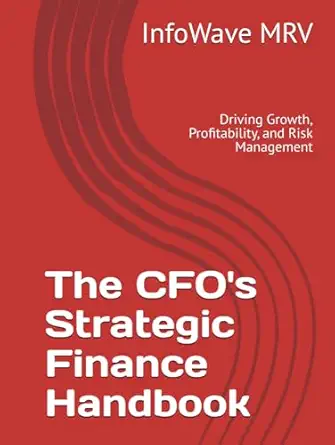
If you are a CFO, Finance Director, Controller, FP&A professional, or aspiring finance leader looking to strengthen your strategic impact, consider reading The CFO's Strategic Finance Handbook: Driving Growth, Profitability, and Risk Management.
This practical guide provides actionable frameworks, leadership insights, and proven strategies to help finance professionals align finance with business strategy, embrace transformation, improve profitability, and lead their organizations with confidence.
Empower your career. Transform your finance function. Drive lasting business success.
Recommended Reading
The CFO's Strategic Finance Handbook: Driving Growth, Profitability, and Risk Management
Dive deeper into this topic with our comprehensive guide. Available now on Amazon.
Buy