

Capital Allocation Strategies for Sustainable Growth: Optimizing Investment Decisions
Every organization has limited financial resources but unlimited opportunities to invest. The challenge for today's CFO is deciding where capital should be invested to maximize long-term value while minimizing risk.
Capital allocation is one of the most important responsibilities of finance leadership. Every investment decision—from expanding operations and acquiring new businesses to investing in technology or returning capital to shareholders—has a direct impact on profitability, competitiveness, and long-term growth.
What Is Capital Allocation?
Capital allocation is the process of distributing an organization's financial resources among competing investment opportunities to maximize shareholder value and support strategic objectives.
Finance leaders constantly evaluate where capital should generate the highest return while balancing risk, liquidity, and long-term business priorities.
Typical capital allocation decisions include:
- Business expansion
- Research and development (R&D)
- Technology modernization
- Digital transformation initiatives
- Mergers and acquisitions
- Debt repayment
- Share repurchases
- Dividend distribution
Why Capital Allocation Matters
Even highly profitable organizations can struggle if capital is allocated inefficiently. Poor investment decisions often result in lower returns, excessive debt, underperforming projects, and missed growth opportunities.
Effective capital allocation enables organizations to:
- Improve profitability
- Increase return on invested capital (ROIC)
- Support sustainable business growth
- Strengthen competitive advantage
- Reduce financial risk
- Create long-term shareholder value
The CFO's Role in Capital Allocation
Modern CFOs are expected to be strategic decision-makers rather than simply financial controllers.
Their responsibilities include:
- Evaluating investment opportunities
- Performing financial modeling
- Conducting scenario analysis
- Managing enterprise risk
- Prioritizing capital expenditures
- Supporting executive decision-making
- Monitoring investment performance
The CFO ensures every investment aligns with the organization's strategic goals and delivers measurable business value.
Key Principles of Effective Capital Allocation
1. Align Investments with Business Strategy
Every capital investment should support long-term organizational objectives. Projects that fail to align with strategic priorities often consume valuable resources without delivering sustainable value.
2. Evaluate Return on Investment (ROI)
Finance leaders should compare investment opportunities using metrics such as:
- Return on Investment (ROI)
- Net Present Value (NPV)
- Internal Rate of Return (IRR)
- Payback Period
- Economic Value Added (EVA)
These metrics help identify projects with the strongest financial potential.
3. Balance Risk and Reward
Higher returns often involve higher risk. Effective capital allocation balances growth opportunities with financial resilience by diversifying investments and conducting comprehensive risk assessments.
4. Preserve Financial Flexibility
Organizations should maintain sufficient liquidity to respond to unexpected market changes while continuing to invest in strategic initiatives.
Capital Allocation in the Digital Age
Today's organizations increasingly invest in technologies that improve productivity and competitiveness.
Common strategic investments include:
- Artificial Intelligence (AI)
- Cloud computing
- Cybersecurity
- Business intelligence platforms
- Automation technologies
- Data analytics solutions
These investments often generate long-term value by improving efficiency, customer experience, and decision-making capabilities.
Common Capital Allocation Mistakes
Finance leaders should avoid:
- Investing without strategic alignment
- Overestimating future returns
- Ignoring risk analysis
- Relying solely on historical performance
- Underinvesting in innovation
- Failing to monitor project outcomes
Successful organizations continuously review investment performance and reallocate resources when priorities change.
Building a Capital Allocation Framework
A structured framework helps organizations make objective, data-driven investment decisions.
An effective framework should include:
- Strategic objective alignment
- Financial evaluation criteria
- Risk assessment methodology
- Investment prioritization process
- Performance monitoring
- Governance and accountability
Such a framework improves transparency and ensures consistency across investment decisions.
The Competitive Advantage of Smart Capital Allocation
Organizations that consistently allocate capital effectively are better positioned to:
- Accelerate business growth
- Improve profitability
- Respond quickly to market changes
- Strengthen innovation capabilities
- Create sustainable competitive advantages
- Deliver superior shareholder returns
Capital allocation is not simply a finance function—it is a strategic capability that shapes the future of the organization.
Conclusion
Capital allocation is one of the most influential responsibilities of today's CFO. By aligning investment decisions with strategic objectives, evaluating opportunities rigorously, and balancing growth with risk, finance leaders help organizations create lasting business value.
Organizations that develop disciplined capital allocation strategies make better investment decisions, improve financial performance, and build resilience in an increasingly competitive marketplace.
The most successful CFOs recognize that every investment decision is an opportunity to strengthen the organization's future.
Recommended Reading for Finance Leaders
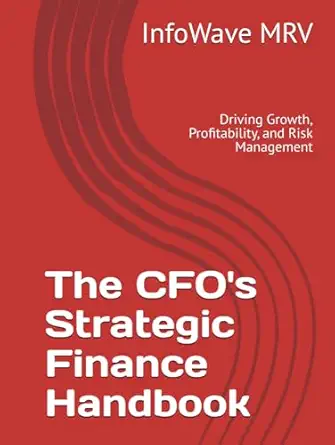
If you're a CFO, Finance Director, Controller, FP&A professional, or aspiring finance executive, The CFO's Strategic Finance Handbook: Driving Growth, Profitability, and Risk Management offers practical frameworks for capital allocation, strategic planning, financial forecasting, risk management, and finance transformation.
Whether you're evaluating investment opportunities, improving capital budgeting, or building a future-ready finance organization, this comprehensive guide provides actionable strategies to help finance leaders make smarter decisions and create sustainable business value.
Invest wisely. Lead strategically. Build long-term growth.
Recommended Reading
The CFO's Strategic Finance Handbook: Driving Growth, Profitability, and Risk Management
Dive deeper into this topic with our comprehensive guide. Available now on Amazon.
Buy