
Cost Management and Optimization: Beyond Cutting, Towards Value Creation
When organizations face economic uncertainty, declining margins, or increasing competitive pressure, cost reduction is often one of the first priorities on the executive agenda. However, simply cutting costs can create unintended consequences—from reduced innovation and lower employee productivity to declining customer satisfaction and slower growth.
For today's Chief Financial Officer (CFO), the objective should go beyond reducing expenses. Modern finance leaders must identify how resources can be redirected toward activities that generate sustainable revenue, improve productivity, strengthen competitive advantage, and create long-term business value.
Why Traditional Cost Cutting Is No Longer Enough
Traditional cost-cutting programs often focus on reducing headcount, freezing budgets, eliminating discretionary spending, or negotiating lower supplier prices. While these actions may provide short-term savings, they do not necessarily improve the underlying economics of the business.
Aggressive cost cutting can also result in:
- Reduced investment in innovation
- Lower employee engagement
- Declining customer experience
- Delayed technology modernization
- Reduced operational capabilities
- Lost opportunities for future growth
A strategic approach asks a different question: Which costs create value, which costs are necessary, and which costs can be eliminated or redesigned?
What Is Strategic Cost Management?
Strategic cost management connects spending decisions directly to business strategy. Instead of treating every expense equally, finance leaders evaluate costs according to the value they generate.
This approach helps organizations:
- Identify high-value investments
- Eliminate unnecessary spending
- Improve operational efficiency
- Increase profitability
- Optimize resource allocation
- Support sustainable growth
The goal is not simply to create a smaller cost base. It is to create a more productive and strategically aligned cost structure.
The CFO's Role in Cost Optimization
The CFO is uniquely positioned to lead cost optimization because finance has visibility across the entire organization.
Modern CFOs can work with business leaders to evaluate:
- Cost drivers
- Profitability by product and customer
- Operational efficiency
- Technology investments
- Supplier performance
- Workforce productivity
- Capital utilization
This enables the CFO to move from being a cost controller to becoming a strategic architect of enterprise value.
Identify the Real Drivers of Cost
Effective cost optimization begins with understanding what actually drives expenses. Simply looking at financial statements may not reveal the operational activities responsible for rising costs.
Organizations should analyze cost drivers such as:
- Production volume
- Customer acquisition
- Transaction volume
- Labor requirements
- Technology infrastructure
- Supply chain complexity
- Product and service complexity
Once the underlying drivers are understood, organizations can redesign processes rather than repeatedly cutting budgets.
Cost Optimization Through Technology
Technology has become one of the most powerful tools for improving cost efficiency without compromising growth.
Organizations can leverage:
- Artificial Intelligence (AI)
- Process automation
- Cloud computing
- Data analytics
- Robotic Process Automation (RPA)
- Digital workflow platforms
- Real-time financial dashboards
Automation can reduce repetitive manual work while allowing employees to focus on higher-value activities such as analysis, innovation, customer service, and strategic decision-making.
Cost Optimization and Profitability
Cost management has a direct impact on profitability, but the relationship is more complex than simply reducing expenses.
For example, eliminating a marketing investment may reduce expenses in the short term but could also reduce future revenue. Similarly, reducing technology spending may improve current-year margins while increasing operational inefficiencies over time.
Strategic CFOs therefore evaluate cost decisions based on their impact on:
- Revenue growth
- Gross margin
- Operating margin
- Cash flow
- Customer lifetime value
- Return on invested capital
- Long-term enterprise value
Zero-Based Thinking for Smarter Spending
Zero-based budgeting can help organizations challenge historical spending assumptions. Instead of automatically increasing or renewing existing budgets, each major expense can be evaluated based on its current strategic value.
The key questions include:
- Does this expense support a strategic objective?
- What value does it create?
- Can the activity be performed more efficiently?
- Can technology automate the process?
- Should the activity be outsourced?
- Would additional investment generate a higher return?
This mindset encourages organizations to allocate resources based on future priorities rather than historical spending patterns.
From Cost Reduction to Resource Reallocation
One of the most important principles of strategic cost optimization is that savings should not simply disappear from the budget. They can be redirected toward initiatives that create greater value.
For example, savings generated through process automation could be reinvested in:
- Product innovation
- Digital transformation
- Customer experience
- Market expansion
- Employee development
- Data and analytics
This transforms cost management into a growth strategy.
Measuring the Success of Cost Optimization
Effective cost optimization requires clear performance measurement. CFOs should monitor both financial savings and the business outcomes associated with those savings.
Important metrics include:
- Operating margin
- Cost-to-revenue ratio
- Cost per transaction
- Revenue per employee
- Operating cash flow
- Return on invested capital
- Product and customer profitability
- Productivity improvements
Measuring these indicators ensures that cost programs create sustainable improvements rather than temporary financial benefits.
Building a Culture of Cost Consciousness
Cost optimization cannot be the responsibility of the finance department alone. Sustainable results require a culture where employees across the organization understand how their decisions affect profitability and value creation.
CFOs can encourage this culture by:
- Making financial information accessible
- Connecting departmental goals to business outcomes
- Rewarding productivity improvements
- Encouraging process innovation
- Creating accountability for spending decisions
When employees understand the connection between spending and business value, cost management becomes part of everyday decision-making.
Cost Optimization as a Competitive Advantage
Organizations with efficient cost structures have greater flexibility to respond to market changes. They can invest faster, withstand economic downturns, and compete more effectively.
Strategic cost optimization can therefore become a source of competitive advantage by enabling businesses to:
- Improve profitability
- Increase financial resilience
- Fund innovation
- Accelerate digital transformation
- Improve customer value
- Strengthen cash generation
- Invest in future growth
Conclusion
Cost management should no longer be viewed simply as an exercise in cutting expenses. For modern CFOs, it is a strategic discipline focused on optimizing resources and directing capital toward the areas that create the greatest business value.
The organizations that succeed will be those that understand the difference between cutting costs and creating value through smarter spending.
By combining financial discipline, technology, data analytics, operational efficiency, and strategic thinking, CFOs can build organizations that are not only leaner but also stronger, more innovative, and better positioned for sustainable growth.
Recommended Reading for Finance Leaders
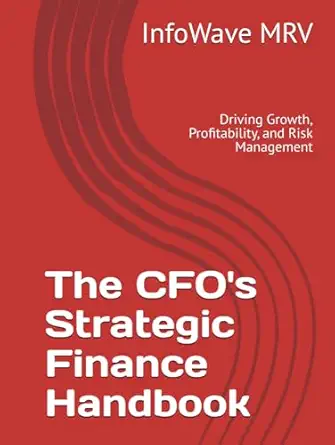
If you're a CFO, Finance Director, Controller, FP&A professional, or aspiring finance executive, The CFO's Strategic Finance Handbook: Driving Growth, Profitability, and Risk Management provides practical frameworks for cost optimization, profitability improvement, strategic planning, capital allocation, financial forecasting, risk management, and finance transformation.
This comprehensive guide helps finance leaders move beyond traditional financial management and develop the strategic capabilities required to drive growth, improve profitability, and create long-term enterprise value.
Don't just cut costs. Optimize resources. Create value. Lead sustainable growth.
Recommended Reading
The CFO's Strategic Finance Handbook: Driving Growth, Profitability, and Risk Management
Dive deeper into this topic with our comprehensive guide. Available now on Amazon.
Buy