

Driving Profitability Through Business Intelligence and Analytics: Data-Driven Decision Making
In today's competitive business environment, profitability is no longer driven simply by increasing revenue or reducing costs. CFOs and finance leaders need to understand why financial performance is changing, where opportunities exist, and what actions can improve business outcomes.
This is where Business Intelligence (BI) and analytics become powerful tools for modern finance teams. By transforming financial and operational data into meaningful insights, CFOs can make faster, more informed decisions and connect financial performance with the operational activities that drive it.
For today's CFO, the goal is not simply to report what happened. The goal is to use data to understand what is happening, anticipate what may happen next, and help the organization decide what to do about it.
From Financial Reporting to Data-Driven Decision Making
Traditional financial reporting primarily focuses on historical performance. Monthly income statements, balance sheets, cash-flow reports, and budget-versus-actual reports remain essential, but they often answer only one question:
What happened?
Business intelligence allows finance leaders to go further by asking:
- Why did revenue increase or decline?
- Which products or customers generate the highest margins?
- Where are operating costs increasing?
- Which business units are underperforming?
- What factors are affecting cash flow?
- What could happen if market conditions change?
This shift from historical reporting to forward-looking analysis enables CFOs to become more active participants in business strategy.
How Business Intelligence Can Improve Profitability
Profitability is influenced by many interconnected factors, including pricing, sales volume, customer mix, product margins, operating expenses, inventory, working capital, and productivity.
BI platforms can bring these data points together and give finance leaders a more complete view of business performance.
Instead of reviewing isolated spreadsheets and reports, CFOs can use dashboards and analytical models to identify trends, exceptions, and relationships across the organization.
For example, revenue may be growing while profitability is declining. A simple revenue report may show positive growth, but deeper analytics could reveal that the company is acquiring lower-margin customers, offering excessive discounts, or experiencing increased fulfillment costs.
The value of analytics comes from uncovering these relationships.
1. Analyze Revenue and Sales Performance
Revenue growth is one of the most visible indicators of business performance, but revenue alone does not tell the complete story.
CFOs can use analytics to examine revenue by:
- Product and service
- Customer segment
- Geographic market
- Sales channel
- Sales representative
- Pricing level
- Time period
This analysis can reveal which areas are actually contributing to profitable growth.
For example, if total sales increase by 15% but gross margin increases by only 3%, finance leaders should investigate the reasons behind the difference. Analytics can help identify pricing pressure, product mix changes, discounts, or increasing delivery costs.
2. Understand Customer and Product Profitability
Not every customer or product contributes equally to profitability.
A customer generating significant revenue may require high levels of support, customization, discounts, returns, or expedited delivery. Similarly, a product with strong sales may have a relatively low contribution margin.
Profitability analytics allows CFOs to look beyond revenue and evaluate the actual contribution of customers and products.
Useful metrics can include:
- Gross margin
- Contribution margin
- Customer acquisition cost
- Customer lifetime value
- Discount percentage
- Service and support costs
- Product-level profitability
These insights can support better pricing strategies, customer segmentation, product portfolio decisions, and resource allocation.
3. Identify Opportunities for Cost Optimization
Cost management is not simply about cutting expenses. Across-the-board cost reductions can sometimes damage productivity, customer experience, or long-term growth.
Analytics allows CFOs to identify where costs are increasing and why.
Finance teams can analyze expenses by department, supplier, location, product, project, or business process. They can also compare actual spending with budgets and historical trends.
For example, an increase in operating expenses may be caused by higher supplier prices, overtime, inefficient processes, increased technology costs, or changes in business volume.
Understanding the underlying drivers allows management to focus on the right areas instead of simply reducing spending across the organization.
4. Improve Cash Flow and Working Capital Management
A profitable business can still face financial pressure if cash is not managed effectively.
Business intelligence can help CFOs monitor key working-capital indicators such as:
- Accounts receivable
- Accounts payable
- Inventory levels
- Days sales outstanding
- Days inventory outstanding
- Cash conversion cycle
By identifying changes in these metrics early, finance teams can take action before working-capital issues become larger problems.
For example, analytics may reveal that a particular customer segment consistently pays later than others. This information can support changes to credit terms, collection strategies, or customer risk management.
5. Strengthen Forecasting and Scenario Planning
One of the most valuable applications of analytics is improving financial forecasting.
Traditional forecasts often rely heavily on historical trends and management assumptions. Modern analytics can incorporate a broader range of financial and operational drivers.
CFOs can develop scenarios such as:
- What happens if sales decline by 10%?
- What happens if raw material costs increase?
- What happens if the company enters a new market?
- What happens if pricing changes?
- What happens if customer demand shifts?
Scenario analysis helps leadership understand potential financial outcomes before making major decisions.
From Dashboards to Actionable Insights
A dashboard by itself does not create profitability.
The real value comes when the information leads to action.
A CFO should therefore focus on connecting analytics with specific business decisions.
For example:
- Insight: A product line has declining margins.
- Investigation: Material costs have increased while pricing has remained unchanged.
- Action: Review supplier contracts and evaluate pricing.
- Measurement: Track the impact on gross margin.
This creates a continuous cycle of data → insight → action → measurement → improvement.
Building a Data-Driven Finance Culture
Technology alone cannot create a data-driven organization. CFOs also need to encourage teams to use data consistently when making decisions.
A strong data-driven finance culture includes:
- Reliable and consistent financial data
- Clearly defined KPIs
- Easy access to relevant information
- Standardized reporting processes
- Collaboration between finance and business teams
- Regular performance reviews based on measurable outcomes
Finance should work closely with sales, operations, procurement, technology, and other business functions. Many profitability drivers exist outside the finance department, and CFOs need visibility into those operational drivers.
Common Challenges in Business Intelligence and Analytics
Implementing BI successfully is not always straightforward.
Organizations may face challenges such as:
- Data stored across multiple systems
- Inconsistent data definitions
- Poor data quality
- Manual reporting processes
- Limited analytical skills
- Too many dashboards and KPIs
- Resistance to changing established processes
CFOs should therefore focus on business outcomes rather than simply implementing more technology.
The objective should be to identify the most important business questions first and then determine what data, analytics, and technology are required to answer them.
The CFO as a Strategic Data Leader
The modern CFO has an opportunity to become more than the owner of financial reporting. By combining financial expertise with business intelligence and analytics, the CFO can help the organization understand the financial impact of operational decisions.
This means asking better questions:
- Where are we creating value?
- Where are we losing value?
- Which investments are producing measurable returns?
- Which customers, products, and markets are most profitable?
- What risks could affect future performance?
- What actions can improve profitability?
When finance teams can answer these questions with reliable data, the CFO becomes a stronger strategic partner to the CEO and the broader leadership team.
Conclusion: Turning Data Into Financial Performance
Business intelligence and analytics are changing the way finance leaders approach profitability. Instead of relying solely on historical financial statements, CFOs can combine financial and operational information to identify trends, understand performance drivers, improve forecasting, and support better decisions.
The objective is not to collect more data. It is to turn the right data into meaningful insights and meaningful insights into measurable business action.
For CFOs, this represents an important shift: from reporting the numbers to using the numbers to shape the future of the business.
Take Your CFO Strategy Further
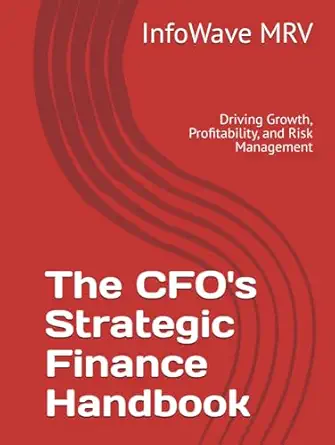
```For finance leaders looking to strengthen their strategic approach to profitability, financial leadership, performance management, and business growth, CFO’s Strategic Finance Handbook: Mastering Financial Leadership for Profitability and Growth provides a practical framework for navigating the evolving role of the modern CFO.
The book explores how CFOs can connect financial strategy with business performance, improve decision-making, manage risk, optimize resources, and contribute more effectively to long-term organizational growth.
Explore the book on Amazon:
CFO’s Strategic Finance Handbook on Amazon
Because the modern CFO doesn't just report performance — they help drive it.
```Recommended Reading
The CFO's Strategic Finance Handbook: Driving Growth, Profitability, and Risk Management
Dive deeper into this topic with our comprehensive guide. Available now on Amazon.
Buy