
Enterprise Risk Management (ERM): Identifying, Assessing, and Mitigating Financial and Operational Risks
Every business operates in an environment of uncertainty. Changing market conditions, rising operating costs, cash flow pressures, regulatory requirements, cybersecurity threats, supply chain disruptions, and unexpected economic events can affect even the most successful organizations.
The difference between a resilient business and a vulnerable one often comes down to how effectively it identifies, evaluates, and responds to these risks.
This is where Enterprise Risk Management (ERM) becomes essential.
Enterprise Risk Management is a structured approach to identifying, assessing, prioritizing, and managing risks across an organization. Rather than treating financial, operational, strategic, and compliance risks as separate issues, ERM creates an integrated view of the factors that could affect business performance.
For modern CFOs, ERM is much more than a compliance responsibility. It is a strategic management discipline that helps organizations protect profitability, preserve cash flow, improve decision-making, and achieve sustainable growth.
1. Understanding Enterprise Risk Management (ERM)
Enterprise Risk Management is an organization-wide framework that connects risk management with business strategy, financial planning, operational performance, and corporate governance.
Traditional risk management often focuses on individual departments or specific threats. ERM takes a broader perspective by evaluating how different risks interact and influence the organization's overall objectives.
For example, a delay in receiving raw materials may initially appear to be an operational issue. However, it can quickly create several financial consequences:
- Production delays and missed delivery commitments.
- Increased procurement and transportation expenses.
- Reduced revenue and declining customer satisfaction.
- Working capital pressure due to delayed collections.
- Potential loss of long-term customer relationships.
An integrated ERM approach helps management understand these connections before they create significant financial damage.
Why ERM Matters to CFOs
The CFO plays a central role in connecting risk management with financial performance.
- Protecting cash flow and maintaining adequate liquidity.
- Evaluating financial exposure and potential losses.
- Monitoring debt obligations and capital structure.
- Improving financial forecasting and budgeting accuracy.
- Strengthening internal financial controls.
- Supporting investment and strategic decisions through risk analysis.
An effective ERM framework allows CFOs to move from reactive financial management toward proactive risk-based decision-making.
2. Identifying the Major Financial and Operational Risks
The first step in enterprise risk management is identifying the risks that could prevent an organization from achieving its business objectives.
A. Financial Risks
Financial risks directly affect an organization's financial stability, profitability, liquidity, and shareholder value.
1. Liquidity Risk
Liquidity risk occurs when a company cannot meet its short-term financial obligations due to insufficient available cash.
For example, a business may report strong revenue growth but experience cash shortages because customers are taking longer to pay invoices.
CFOs should monitor cash flow forecasts, accounts receivable aging, working capital requirements, short-term debt obligations, and cash conversion cycles.
2. Credit Risk
Credit risk arises when customers, suppliers, or other counterparties fail to meet their financial commitments.
Practical mitigation strategies include customer credit assessments, credit limits, payment monitoring, and customer diversification.
3. Market Risk
Market risk includes financial exposure resulting from changes in interest rates, foreign exchange rates, commodity prices, and broader market conditions.
CFOs can manage these exposures through appropriate hedging strategies, pricing reviews, financial forecasting, and scenario analysis.
4. Capital Structure Risk
Excessive borrowing can increase interest expenses, reduce financial flexibility, and create repayment pressure. CFOs must regularly evaluate debt-to-equity ratios, interest coverage, borrowing costs, and debt maturity profiles.
B. Operational Risks
Operational risks arise from failures in internal processes, people, systems, technology, or external events that disrupt business activities.
1. Supply Chain Risk
Dependence on a limited number of suppliers can expose businesses to production interruptions, price fluctuations, and delivery delays. Organizations should evaluate supplier reliability, maintain alternative sourcing arrangements, and monitor critical inventory levels.
2. Technology and Cybersecurity Risk
Digital transformation creates opportunities for efficiency but also introduces risks involving data breaches, system failures, ransomware, and unauthorized access.
Organizations should strengthen cybersecurity controls, establish disaster recovery procedures, conduct regular security assessments, and maintain reliable data backups.
3. Process and Internal Control Risk
Weak internal controls can result in financial errors, fraudulent transactions, inventory losses, and inefficient business operations.
Segregation of duties, approval workflows, periodic reconciliations, and internal audits help reduce these exposures.
4. Human Resource Risk
Employee turnover, inadequate training, skill shortages, and dependence on key personnel can affect business continuity.
Organizations should invest in employee development, succession planning, knowledge management, and effective performance management.
3. How to Identify Business Risks Before They Become Financial Problems
Identifying risks requires more than reviewing historical financial statements. Businesses need a systematic approach that combines financial information, operational insights, management experience, and external market intelligence.
Financial Statement Analysis
Review balance sheets, income statements, and cash flow statements to identify warning signs such as declining margins, rising debt, increasing receivables, and deteriorating liquidity.
Scenario Analysis
Evaluate how different business conditions could affect financial performance.
- What happens if revenue declines by 15%?
- What if raw material costs increase by 10%?
- What if a major customer delays payment by 60 days?
- What if interest rates increase significantly?
Internal Audits and Process Reviews
Examine business processes to identify control weaknesses, operational inefficiencies, and potential fraud exposure.
Management Discussions
Engage department heads, finance teams, procurement managers, IT professionals, and operations leaders to understand risks that may not be visible in financial reports.
Industry and Market Analysis
Monitor economic indicators, competitor activities, regulatory developments, technological changes, and supply chain conditions.
The objective is to develop a comprehensive risk inventory that reflects the organization's actual operating environment.
4. Assessing and Prioritizing Risks: Which Risks Deserve Immediate Attention?
Identifying every possible risk is not enough. Organizations must determine which risks have the greatest potential impact on business objectives.
A practical approach is to evaluate each risk based on two dimensions:
- Likelihood: How probable is the risk?
- Impact: How serious would the consequences be if it occurred?
Enterprise Risk Assessment Matrix
| Risk | Likelihood | Impact | Priority |
|---|---|---|---|
| Major customer default | High | High | Critical |
| Cybersecurity breach | Medium | Very High | Critical |
| Raw material price increase | High | Medium | High |
| Employee turnover | Medium | Medium | Moderate |
| Minor process delays | Low | Low | Low |
Note: This matrix is illustrative. Actual ratings should reflect company-specific evidence and risk appetite.
Financial Impact Assessment
CFOs should go beyond qualitative risk ratings and estimate the potential financial consequences wherever practical.
For example, consider a company with annual revenue of $20 million.
If a major operational disruption results in a 5% reduction in annual revenue:
$20 million × 5% = $1 million
This simple calculation helps management understand the financial significance of operational risks.
More sophisticated organizations can also use sensitivity analysis, probability-based financial modeling, stress testing, Monte Carlo simulations, expected loss calculations, and cash flow forecasting.
5. Developing Effective Risk Mitigation Strategies
Once risks have been identified and assessed, organizations must determine how to manage them.
1. Risk Avoidance
Avoid activities that expose the organization to unacceptable levels of risk.
Example: Rejecting a business expansion opportunity in a market where regulatory uncertainty and financial exposure are excessive.
2. Risk Reduction
Implement controls and operational improvements to reduce the likelihood or impact of a risk.
Example: Introducing stronger cybersecurity systems, improving inventory controls, or diversifying suppliers.
3. Risk Transfer
Transfer certain financial consequences to another party through insurance, contractual arrangements, or appropriate financial instruments.
Example: Purchasing business interruption insurance to reduce the financial consequences of certain unexpected disruptions.
4. Risk Acceptance
Accept a risk when its potential impact is within the organization's approved risk appetite and the cost of mitigation exceeds the expected benefit.
Example: Accepting a minor operational delay that has limited financial consequences.
The CFO should ensure that every significant risk has a clearly defined response strategy, an accountable owner, and measurable performance indicators.
6. The CFO's Role in Integrating ERM with Financial Planning
One of the biggest mistakes organizations make is treating risk management as a separate exercise from financial planning.
Risk management becomes significantly more effective when it is integrated into budgeting, forecasting, investment evaluation, and capital allocation.
Integrating Risk into Budgeting
A risk-adjusted budgeting approach considers potential changes in business conditions, including slower customer demand, increased operating expenses, or delayed collections.
Strengthening Cash Flow Management
CFOs should establish rolling cash flow forecasts, monitor liquidity requirements, and maintain appropriate contingency reserves.
Improving Investment Decisions
Before approving major capital expenditure, management should evaluate expected return on investment, payback period, project execution risks, market demand uncertainty, financing requirements, and downside financial scenarios.
Connecting Risk with Profitability
Every major risk has the potential to influence revenue, operating costs, working capital, or capital requirements.
Understanding these relationships enables CFOs to protect margins while supporting sustainable business growth.
7. Using Technology, Business Intelligence, and Analytics for Risk Management
Modern organizations generate enormous amounts of financial and operational data. However, data becomes valuable only when management can translate it into actionable insights.
Real-Time Financial Dashboards
Monitor revenue, expenses, liquidity, receivables, debt, and profitability through centralized dashboards.
Predictive Analytics
Use historical trends and statistical models to identify potential cash flow shortages, customer payment defaults, or unusual expense patterns.
Automated Risk Alerts
Establish notifications when key financial or operational indicators exceed predefined thresholds.
Performance Monitoring
Compare actual results against budgets, forecasts, and established risk limits.
Fraud Detection
Use transaction monitoring and analytical tools to identify unusual financial activities and potential control weaknesses.
For example, if a company's receivables aging increases beyond its established threshold, an automated alert can notify the finance team before the situation creates a significant cash flow problem.
The combination of financial expertise, technology, and analytical capabilities makes risk management more proactive and measurable.
8. Establishing Key Risk Indicators (KRIs) to Monitor Business Performance
Key Risk Indicators help organizations identify early warning signals that indicate increasing exposure to potential risks.
Unlike traditional performance indicators, which primarily measure business results, KRIs help management understand whether the organization is moving toward an unacceptable risk position.
| Risk Category | Key Risk Indicator |
|---|---|
| Liquidity Risk | Current ratio and cash runway |
| Credit Risk | Overdue receivables percentage |
| Market Risk | Foreign exchange exposure |
| Operational Risk | Production downtime |
| Supply Chain Risk | Supplier delivery delays |
| Cybersecurity Risk | Critical security incidents |
| Compliance Risk | Number of unresolved compliance issues |
CFOs should establish clear thresholds for each indicator.
For example, if overdue receivables exceed 15% of total receivables, management may initiate a customer credit review and collection action.
KRIs should be reviewed regularly and connected to defined management actions.
9. Building an Effective Enterprise Risk Management Framework
A successful ERM framework requires more than policies and documentation. It needs clear accountability, management commitment, consistent communication, and continuous monitoring.
The COSO Enterprise Risk Management Framework provides an established reference for integrating risk with strategy and performance.
Stage 1: Establish Risk Governance
Define the roles of the board, executive management, CFO, risk managers, and departmental leaders.
Stage 2: Identify and Assess Risks
Develop an enterprise-wide risk register and evaluate risks based on likelihood, impact, and financial exposure.
Stage 3: Define Risk Appetite
Establish the level and type of risk the organization is willing to accept while pursuing its strategic objectives.
Stage 4: Implement Mitigation Controls
Assign risk owners, define response strategies, establish control procedures, and allocate resources.
Stage 5: Monitor, Report, and Improve
Regularly review risk indicators, evaluate mitigation effectiveness, and update the framework as business conditions change.
Importantly, ERM should not be limited to an annual assessment. It must evolve alongside the organization, its strategy, and its operating environment.
10. Practical ERM Example: Managing Financial and Operational Risks Together
Consider a manufacturing company experiencing rising production costs and declining profitability.
A traditional approach might focus primarily on reducing operating expenses.
However, an integrated ERM assessment may identify several interconnected problems:
- Dependence on a single raw material supplier.
- Increasing commodity prices.
- Inefficient inventory management.
- Delayed customer payments.
- Rising production downtime.
Instead of treating these issues separately, the CFO can develop an integrated response:
- Identify alternative suppliers to reduce supply chain dependency.
- Introduce procurement cost monitoring and price sensitivity analysis.
- Optimize inventory levels to reduce working capital requirements.
- Strengthen customer credit policies and collections.
- Monitor production efficiency and equipment downtime.
- Incorporate risk-adjusted assumptions into financial forecasts.
The result is a more comprehensive approach to protecting profitability, improving operational efficiency, and strengthening financial resilience.
Conclusion: Turning Risk Management into a Competitive Advantage
Enterprise Risk Management should not be viewed as an administrative requirement or a defensive business activity.
It is a strategic capability that enables organizations to make better decisions under uncertainty.
For CFOs, effective ERM means understanding how financial exposures, operational weaknesses, market conditions, and strategic decisions influence business performance.
Organizations that proactively identify risks, quantify potential financial consequences, establish effective controls, and continuously monitor key indicators are better positioned to protect profitability and achieve sustainable growth.
Ultimately, the goal of ERM is not to eliminate every business risk. It is to ensure that risks are understood, measured, and managed in alignment with the organization's strategic objectives.
The strongest CFOs do not simply report financial performance. They anticipate challenges, protect enterprise value, and help leadership make informed decisions about the future.
Take the Next Step: Strengthen Your Strategic Finance Capabilities
Understanding financial risk, improving profitability, optimizing capital allocation, and supporting strategic business decisions are essential capabilities for today's finance leaders.
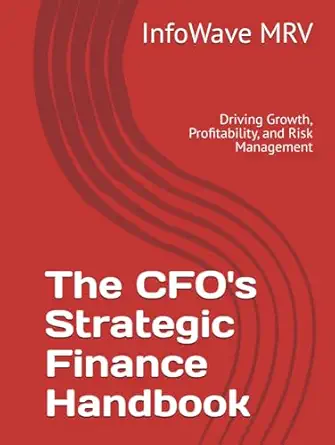
CFO's Strategic Finance Handbook: Driving Profitability and Business Growth by InfoWave MRV explores the strategic role of modern finance leadership and provides insights for professionals looking to strengthen financial management and business decision-making.
Whether you are a CFO, finance executive, business owner, or aspiring finance leader, developing a strategic approach to financial management can help you move beyond traditional reporting and contribute more effectively to organizational growth.
Explore the Book on AmazonInfoWave MRV
Turning Insight into Impact.
Recommended Reading
The CFO's Strategic Finance Handbook: Driving Growth, Profitability, and Risk Management
Dive deeper into this topic with our comprehensive guide. Available now on Amazon.
Buy