

Funding Growth: Debt, Equity, and Alternative Financing: Navigating the Capital Markets
Growth requires capital. Whether expanding into new markets, investing in digital transformation, acquiring competitors, or launching innovative products, organizations need sufficient funding to execute their strategic vision.
For today's Chief Financial Officer (CFO), securing capital is no longer simply about obtaining funds—it is about choosing the right financing strategy that balances growth, profitability, shareholder value, and financial risk.
Why Funding Strategy Matters
Poor financing decisions can increase debt burdens, dilute shareholder value, restrict cash flow, and limit future growth opportunities.
A well-designed funding strategy enables organizations to:
- Accelerate business expansion
- Invest in innovation
- Strengthen competitive advantage
- Improve liquidity
- Support mergers and acquisitions
- Create long-term shareholder value
The CFO's Role in Capital Raising
Modern CFOs play a central role in evaluating financing alternatives and determining the optimal capital structure.
Their responsibilities include:
- Assessing funding requirements
- Managing capital structure
- Balancing debt and equity
- Maintaining financial flexibility
- Managing investor and lender relationships
- Optimizing cost of capital
- Supporting strategic growth initiatives
Debt Financing
Debt financing involves borrowing funds through bank loans, bonds, credit facilities, or other lending arrangements.
Advantages
- No ownership dilution
- Interest payments are generally tax deductible
- Lower cost of capital than equity in many cases
- Predictable repayment schedules
Challenges
- Interest obligations
- Higher financial risk
- Debt covenant restrictions
- Reduced flexibility during economic downturns
Debt financing is often suitable for stable organizations with predictable cash flows.
Equity Financing
Equity financing raises capital by issuing ownership shares to investors.
Advantages
- No repayment obligations
- Lower financial risk
- Supports large-scale expansion
- Strengthens the balance sheet
Challenges
- Ownership dilution
- Reduced earnings per share
- Investor expectations
- Longer fundraising process
Equity financing is often preferred by high-growth businesses pursuing aggressive expansion.
Alternative Financing Options
Today's capital markets provide numerous financing alternatives beyond traditional debt and equity.
Common options include:
- Private equity
- Venture capital
- Mezzanine financing
- Asset-based lending
- Revenue-based financing
- Crowdfunding
- Government grants and incentives
- Strategic partnerships
Each option offers unique advantages depending on an organization's growth stage and financing objectives.
Optimizing Capital Structure
An effective capital structure balances debt and equity to minimize the organization's weighted average cost of capital (WACC) while maintaining financial stability.
CFOs evaluate:
- Cost of debt
- Cost of equity
- Interest coverage ratio
- Debt-to-equity ratio
- Liquidity position
- Future capital requirements
Maintaining the right balance ensures organizations can fund growth without taking unnecessary financial risks.
Managing Capital Market Risks
External financing introduces several risks that finance leaders must actively manage.
- Interest rate fluctuations
- Market volatility
- Credit risk
- Currency risk
- Regulatory changes
- Investor sentiment
Robust financial planning and scenario analysis help organizations remain resilient under changing market conditions.
Technology's Impact on Corporate Financing
Technology is transforming how organizations access capital and manage investor relationships.
Modern finance teams increasingly use:
- AI-driven financial forecasting
- Predictive analytics
- Cloud-based treasury systems
- Digital investor reporting
- Automated cash management
- Real-time financial dashboards
These technologies improve transparency, enhance decision-making, and strengthen capital planning.
Best Practices for CFOs
- Align financing with long-term business strategy
- Diversify funding sources
- Maintain adequate liquidity reserves
- Continuously monitor capital markets
- Strengthen relationships with investors and lenders
- Regularly review capital structure
- Use scenario planning for financing decisions
The Future of Corporate Financing
Capital markets continue to evolve rapidly. Sustainable finance, ESG-linked loans, green bonds, fintech lending platforms, and digital assets are creating new funding opportunities for businesses worldwide.
Finance leaders who understand these evolving markets will be better positioned to secure capital, reduce financing costs, and support long-term strategic growth.
Conclusion
Funding growth is one of the most strategic responsibilities of the modern CFO. Selecting the right combination of debt, equity, and alternative financing enables organizations to pursue growth while maintaining financial strength and flexibility.
By understanding capital markets, evaluating financing alternatives, and optimizing capital structure, CFOs can unlock new opportunities, reduce risk, and create sustainable shareholder value.
The most successful finance leaders don't simply raise capital—they build financing strategies that power long-term business success.
Recommended Reading for Finance Leaders
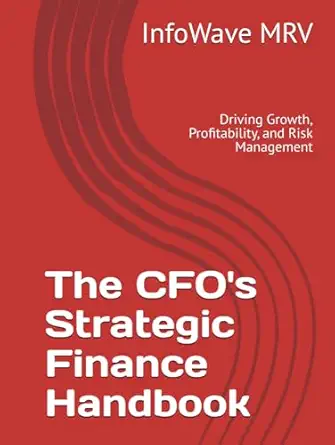
If you're a CFO, Finance Director, Controller, FP&A professional, or aspiring finance executive, The CFO's Strategic Finance Handbook: Driving Growth, Profitability, and Risk Management provides practical guidance on strategic finance, capital allocation, funding strategies, financial forecasting, mergers and acquisitions, digital transformation, and risk management.
Packed with actionable frameworks and real-world insights, this comprehensive guide helps finance leaders make smarter financing decisions, strengthen capital structures, and drive sustainable business growth.
Master strategic finance. Secure smarter funding. Lead sustainable growth.
Recommended Reading
The CFO's Strategic Finance Handbook: Driving Growth, Profitability, and Risk Management
Dive deeper into this topic with our comprehensive guide. Available now on Amazon.
Buy