
Performance Measurement and KPIs: Beyond the P&L
The Profit and Loss statement is one of the most important financial reports in any organization. It tells leaders how much revenue the business generated, what it spent, and whether it produced a profit or loss.
But the P&L tells only part of the story.
For today's CFO, understanding business performance requires looking beyond historical financial results. Modern finance leaders need a broader performance measurement framework that combines financial and operational Key Performance Indicators (KPIs) to understand why results are changing, what is likely to happen next, and where management should take action.
Why the P&L Alone Is Not Enough
Financial statements provide essential information about business performance, but many critical business drivers do not immediately appear on the P&L.
For example, declining profitability could be caused by:
- Lower customer retention
- Increasing customer acquisition costs
- Declining productivity
- Pricing pressure
- Supply chain inefficiencies
- Higher employee turnover
- Reduced product quality
By the time these issues appear in financial results, the underlying problem may already have existed for months.
Strategic KPIs provide early signals that allow CFOs and business leaders to take corrective action before financial performance deteriorates.
What Are Key Performance Indicators?
Key Performance Indicators are measurable metrics used to evaluate progress toward specific business objectives.
Effective KPIs should connect directly to organizational strategy. The objective is not to track as many metrics as possible, but to identify the indicators that provide meaningful insight into business performance.
A strong KPI should be:
- Relevant to a strategic objective
- Clearly measurable
- Consistent over time
- Actionable
- Easy for decision-makers to understand
Financial KPIs Every CFO Should Monitor
Financial KPIs remain essential to understanding profitability, liquidity, and financial health.
Examples include:
- Revenue growth
- Gross profit margin
- Operating margin
- EBITDA margin
- Free cash flow
- Return on invested capital (ROIC)
- Working capital
- Cash conversion cycle
- Debt-to-equity ratio
These indicators help CFOs evaluate whether the organization is generating sustainable financial returns.
Operational KPIs: Understanding What Drives Financial Results
Financial performance is ultimately driven by operational activity. Therefore, CFOs should also monitor the operational metrics that influence financial outcomes.
Depending on the organization, these may include:
- Production efficiency
- Order fulfillment time
- Customer retention
- Employee productivity
- Inventory turnover
- Product defect rates
- Sales conversion rates
- Customer satisfaction
Connecting operational KPIs to financial outcomes allows finance leaders to understand the underlying drivers of profitability.
Customer KPIs and Revenue Performance
Revenue growth is not simply about acquiring more customers. Understanding customer behavior is critical to sustainable growth.
Important customer and revenue KPIs include:
- Customer Acquisition Cost (CAC)
- Customer Lifetime Value (CLV)
- Customer retention rate
- Churn rate
- Average Revenue Per User (ARPU)
- Net Revenue Retention (NRR)
- Average selling price
These metrics help CFOs identify which customers, products, and markets generate the greatest economic value.
Employee and Productivity KPIs
People are one of the most important drivers of business performance. Financial leaders should therefore consider workforce metrics alongside financial results.
Useful indicators include:
- Revenue per employee
- Profit per employee
- Employee turnover
- Absenteeism
- Employee engagement
- Training effectiveness
- Time-to-productivity
Monitoring these metrics can help organizations identify productivity opportunities and anticipate workforce-related risks.
Leading vs. Lagging Indicators
One of the most important concepts in performance measurement is the difference between leading and lagging indicators.
Lagging Indicators
Lagging indicators measure outcomes that have already occurred. Examples include revenue, profit, EBITDA, and cash flow.
Leading Indicators
Leading indicators provide signals about future performance. Examples include sales pipeline, customer engagement, employee turnover, order volume, and conversion rates.
A balanced performance framework combines both types of indicators.
Connecting KPIs to Strategic Objectives
A common mistake is measuring KPIs without connecting them to organizational strategy.
For example, if the strategic objective is profitable growth, the organization might track:
- Revenue growth
- Gross margin
- Customer lifetime value
- Customer acquisition cost
- Market share
If the objective is operational excellence, KPIs might include:
- Cost per unit
- Cycle time
- Productivity
- Defect rates
- Capacity utilization
This ensures that measurement supports strategy rather than becoming a collection of disconnected numbers.
The CFO as the Architect of Performance Measurement
Modern CFOs are increasingly responsible for creating performance management frameworks that bring financial and operational information together.
The CFO can help the organization:
- Define the right KPIs
- Establish performance targets
- Create accountability
- Connect KPIs to strategic objectives
- Build executive dashboards
- Identify performance gaps
- Drive data-based decision-making
This transforms finance from a reporting function into an intelligence and decision-support function.
Technology and Real-Time Performance Management
Technology has significantly changed how organizations measure performance. Cloud platforms, business intelligence tools, automation, and artificial intelligence allow finance teams to move from periodic reporting toward real-time performance monitoring.
Modern CFO dashboards can bring together:
- Financial data
- Sales performance
- Customer metrics
- Operational data
- Workforce analytics
- Forecasting information
With real-time visibility, leaders can identify emerging trends and respond faster to changing business conditions.
Common KPI Mistakes to Avoid
More KPIs do not necessarily mean better performance management. Organizations should avoid:
- Tracking too many metrics
- Using KPIs that are not linked to strategy
- Focusing exclusively on financial metrics
- Ignoring leading indicators
- Setting unrealistic targets
- Failing to assign accountability
- Using outdated or unreliable data
The goal should be to create a focused set of meaningful indicators that drive better decisions.
Building a Balanced KPI Framework
A strong performance measurement system should provide a balanced view of the organization.
CFOs can structure KPIs across several dimensions:
- Financial: Revenue, profitability, cash flow, ROIC
- Customer: Retention, satisfaction, lifetime value
- Operations: Productivity, efficiency, quality
- People: Engagement, turnover, productivity
- Growth: Market share, new products, new customers
This holistic approach provides executives with a more complete understanding of organizational health.
Conclusion
Performance measurement is no longer limited to reviewing the P&L at the end of each reporting period. Modern organizations need a broader view that connects financial performance with the operational, customer, employee, and strategic drivers behind those results.
For CFOs, the opportunity is to transform KPIs from simple reporting metrics into powerful tools for strategic decision-making.
The right performance measurement framework helps leaders identify emerging problems earlier, allocate resources more effectively, improve accountability, and create sustainable business value.
Look beyond the P&L. Measure what drives performance. Turn data into decisions.
Recommended Reading for Finance Leaders
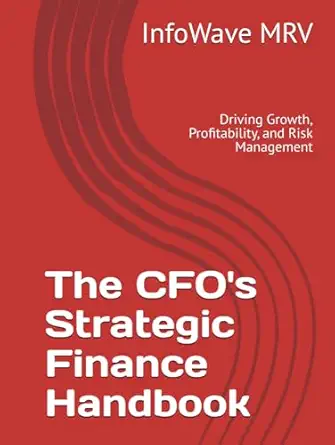
If you're a CFO, Finance Director, Controller, FP&A professional, or aspiring finance executive, The CFO's Strategic Finance Handbook: Driving Growth, Profitability, and Risk Management provides practical frameworks for performance management, strategic planning, financial forecasting, capital allocation, profitability improvement, risk management, and finance transformation.
With actionable insights and real-world scenarios, the book helps finance leaders move beyond traditional reporting and develop the strategic capabilities needed to drive business performance and long-term growth.
Go beyond the numbers. Strengthen your financial leadership. Create greater business value.
Recommended Reading
The CFO's Strategic Finance Handbook: Driving Growth, Profitability, and Risk Management
Dive deeper into this topic with our comprehensive guide. Available now on Amazon.
Buy