

Strategic Planning and Financial Forecasting: From Vision to Actionable Numbers
Every successful organization begins with a vision. Whether the goal is expanding into new markets, increasing profitability, launching innovative products, or improving operational efficiency, achieving these ambitions requires more than optimism. It requires strategic planning supported by accurate financial forecasting.
For today's Chief Financial Officers (CFOs), finance is no longer limited to tracking historical performance. Modern finance leaders are expected to transform organizational vision into measurable financial strategies that guide executive decision-making and create sustainable business value.
Why Strategic Planning Matters
Strategic planning provides a roadmap that aligns organizational resources, priorities, and investments with long-term objectives. Without a well-defined strategy, businesses often struggle with inconsistent decision-making, inefficient spending, and missed opportunities.
Effective strategic planning helps organizations:
- Define long-term business objectives
- Identify growth opportunities
- Prioritize investments
- Allocate resources efficiently
- Measure organizational performance
- Respond proactively to market changes
For CFOs, strategic planning ensures that every financial decision supports the broader mission of the organization.
The Importance of Financial Forecasting
Financial forecasting converts strategic objectives into measurable financial outcomes. Rather than relying solely on historical data, forecasting enables organizations to anticipate future performance and prepare for changing market conditions.
Modern financial forecasting supports:
- Revenue projections
- Expense planning
- Cash flow management
- Capital investment decisions
- Scenario planning
- Risk assessment
Reliable forecasts enable leadership teams to make confident, data-driven decisions that support sustainable growth.
Connecting Strategy with Financial Execution
Many organizations develop excellent business strategies but fail during execution because financial planning is disconnected from strategic priorities.
High-performing organizations integrate strategic planning with financial forecasting to ensure:
- Business objectives drive budgeting decisions
- Financial resources support strategic initiatives
- Performance metrics align with corporate goals
- Leaders can quickly adapt to changing conditions
This integration allows finance to become a strategic partner rather than simply a reporting function.
The CFO's Role in Strategic Planning
Today's CFO plays a central role in helping organizations balance growth opportunities with financial discipline.
Strategic CFOs help executive teams:
- Evaluate investment opportunities
- Develop long-term financial strategies
- Assess business risks
- Optimize capital allocation
- Improve profitability
- Support executive decision-making
By providing objective financial insights, CFOs enable organizations to pursue ambitious goals while maintaining financial stability.
Modern Forecasting Techniques
Traditional annual budgets are no longer sufficient in today's rapidly changing business environment. Organizations increasingly rely on agile forecasting methods that provide greater flexibility and responsiveness.
Leading finance organizations use:
- Rolling forecasts
- Predictive analytics
- Artificial Intelligence (AI)
- Scenario modeling
- Driver-based planning
- Cloud-based FP&A platforms
These tools enable finance teams to respond quickly to market shifts and support proactive decision-making.
Common Challenges in Financial Forecasting
Even experienced finance teams face forecasting challenges, including:
- Economic uncertainty
- Rapid market changes
- Incomplete or inaccurate data
- Changing customer behavior
- Supply chain disruptions
- Regulatory changes
Organizations that embrace advanced analytics and continuous forecasting are better positioned to manage uncertainty and reduce forecasting errors.
Best Practices for Finance Leaders
To build a strategic finance function, CFOs should focus on:
- Aligning financial plans with corporate strategy
- Collaborating across departments
- Leveraging technology and automation
- Monitoring key performance indicators (KPIs)
- Regularly updating forecasts
- Developing data-driven finance teams
These practices strengthen organizational agility and improve the quality of strategic decision-making.
The Competitive Advantage of Strategic Finance
Organizations that integrate strategic planning with financial forecasting consistently outperform those relying on static budgets and reactive decision-making.
Benefits include:
- Higher profitability
- Improved cash flow management
- Better capital allocation
- Enhanced risk management
- Greater organizational agility
- Stronger investor confidence
- Long-term sustainable growth
Finance becomes more than a support function—it becomes a driver of business success.
Conclusion
Strategic planning and financial forecasting are essential capabilities for modern finance organizations. Together, they transform ambitious business visions into actionable financial strategies that guide investment decisions, improve performance, and create lasting value.
For CFOs, success is no longer measured solely by accurate financial reporting. It is measured by the ability to help the organization anticipate change, allocate resources wisely, and execute strategy with confidence.
The future belongs to finance leaders who combine strategic thinking with financial excellence.
Recommended Reading for Finance Leaders
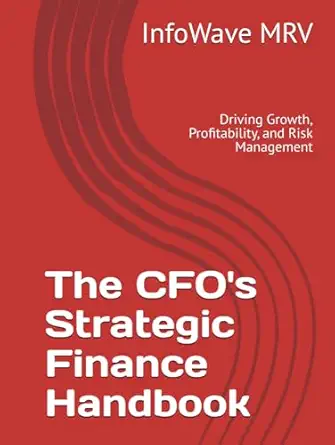
If you're a CFO, Finance Director, Controller, FP&A professional, or aspiring finance executive, The CFO's Strategic Finance Handbook: Driving Growth, Profitability, and Risk Management provides practical frameworks to strengthen strategic planning, improve financial forecasting, optimize capital allocation, and build a high-performing finance organization.
Whether you're leading finance transformation or preparing for the next stage of your career, this comprehensive guide offers actionable insights that help finance leaders create measurable business value.
Transform your vision into actionable numbers—and your finance function into a strategic competitive advantage.
Recommended Reading
The CFO's Strategic Finance Handbook: Driving Growth, Profitability, and Risk Management
Dive deeper into this topic with our comprehensive guide. Available now on Amazon.
Buy