

Working Capital Management for Optimal Liquidity and Profitability: Mastering the Cash Conversion Cycle
For many organizations, profitability on the income statement does not always translate into cash in the bank. A business can report strong revenue and healthy profits while still facing cash-flow pressure because too much capital is tied up in inventory, receivables, or other working capital assets.
This is why working capital management is one of the most important responsibilities of a modern Chief Financial Officer (CFO).
Effective working capital management is not simply about preserving cash. It is about finding the right balance between liquidity, profitability, operational efficiency, and growth.
What Is Working Capital Management?
Working capital generally represents the short-term resources available to operate a business.
Key components include:
- Accounts receivable
- Inventory
- Cash and cash equivalents
- Accounts payable
- Short-term operating liabilities
Working capital management focuses on optimizing these components so the organization can meet its short-term obligations while maximizing financial efficiency.
For CFOs, this means continuously asking:
- How quickly are customers paying?
- How much cash is tied up in inventory?
- Can supplier payment terms be optimized?
- How much liquidity does the business actually need?
- Can the company generate more cash without slowing growth?
Why Working Capital Matters to CFOs
Working capital directly affects both liquidity and profitability.
Excessive working capital can mean that valuable cash is sitting idle. Insufficient working capital can create operational disruption, missed payments, supply-chain problems, and financial stress.
Effective working capital management can help organizations:
- Improve cash flow
- Reduce financing requirements
- Strengthen liquidity
- Lower borrowing costs
- Improve profitability
- Support business expansion
- Increase financial resilience
For CFOs, working capital therefore becomes a strategic lever rather than merely an accounting metric.
Understanding the Cash Conversion Cycle
One of the most useful tools for analyzing working capital efficiency is the Cash Conversion Cycle (CCC).
The cash conversion cycle measures how long it takes for a company to convert cash invested in operations back into cash collected from customers.
The three major components are:
1. Days Inventory Outstanding (DIO)
DIO measures how long inventory remains in the business before being sold.
A high DIO may indicate:
- Excess inventory
- Slow-moving products
- Poor demand forecasting
- Inefficient inventory management
- Product obsolescence
Reducing unnecessary inventory can release significant amounts of cash.
2. Days Sales Outstanding (DSO)
DSO measures how quickly customers pay their invoices.
A high DSO may indicate:
- Weak credit policies
- Inefficient collections
- Billing delays
- Customer disputes
- Poor payment terms
Improving collections can accelerate cash inflows without necessarily increasing revenue.
3. Days Payable Outstanding (DPO)
DPO measures how long the company takes to pay suppliers.
Extending payment terms appropriately can improve liquidity, provided supplier relationships and contractual obligations are maintained.
The objective is not simply to maximize DPO. CFOs must balance cash preservation with supplier relationships, discounts, and supply-chain stability.
The Strategic Importance of Reducing the Cash Conversion Cycle
A shorter cash conversion cycle generally means that the organization recovers its investment in working capital faster.
Consider a business that reduces its cash conversion cycle from 70 days to 50 days.
That 20-day improvement can potentially release significant cash that can be used for:
- Debt reduction
- Technology investment
- Product development
- Marketing
- Acquisitions
- Employee development
- Shareholder returns
This demonstrates why working capital optimization can become a source of growth capital.
Optimizing Accounts Receivable
Accounts receivable is often one of the largest sources of trapped cash.
CFOs can improve receivables performance through:
- Clear customer credit policies
- Accurate and timely invoicing
- Automated billing
- Electronic payment options
- Early-payment incentives
- Automated collection reminders
- Customer credit monitoring
- Dispute-resolution processes
Finance teams should also segment customers according to payment behavior and risk. Not every customer requires the same credit terms.
Optimizing Inventory
Inventory provides an important buffer for operations, but excessive inventory consumes cash and creates additional costs.
Organizations can improve inventory efficiency through:
- Better demand forecasting
- Inventory segmentation
- Safety-stock optimization
- Real-time inventory visibility
- Supplier collaboration
- Slow-moving inventory analysis
- Just-in-time approaches where appropriate
Technology and predictive analytics can help finance and operations teams identify inventory patterns before they become costly problems.
Strategic Accounts Payable Management
Accounts payable represents an important source of short-term financing.
CFOs should evaluate:
- Supplier payment terms
- Early-payment discounts
- Contractual obligations
- Supplier concentration
- Payment scheduling
- Procurement efficiency
The objective should be to optimize payment timing rather than simply delay payments.
A strategy that improves cash flow but damages critical supplier relationships can ultimately create more financial risk than value.
Working Capital and Profitability
Working capital decisions can have a direct impact on profitability.
For example, reducing excess inventory can lower:
- Storage costs
- Insurance costs
- Obsolescence
- Handling expenses
- Financing costs
Improving receivables collection can reduce the need for short-term borrowing, while optimizing supplier relationships can improve purchasing economics.
Therefore, working capital optimization can simultaneously improve cash flow and profitability.
Technology Is Transforming Working Capital Management
Traditional working capital management often depends on spreadsheets, periodic reporting, and manual processes.
Modern finance organizations increasingly use technology to create real-time visibility.
Useful technologies include:
- Enterprise Resource Planning (ERP) systems
- Artificial Intelligence (AI)
- Predictive analytics
- Automated accounts receivable platforms
- Digital payment systems
- Cash-flow forecasting tools
- Business intelligence dashboards
- Robotic Process Automation (RPA)
These technologies allow CFOs to identify working capital problems earlier and respond faster.
Cash Flow Forecasting
Effective working capital management depends heavily on accurate cash-flow forecasting.
CFOs should develop forecasts that consider:
- Expected customer collections
- Supplier payments
- Payroll obligations
- Tax payments
- Debt repayments
- Capital expenditures
- Seasonal demand
- Business growth
Scenario planning can further improve resilience by modeling situations such as:
- Delayed customer payments
- Demand fluctuations
- Supply-chain disruptions
- Rising interest rates
- Unexpected expenses
Better forecasting gives management greater confidence when making investment and financing decisions.
Key Working Capital KPIs for CFOs
A strong working capital dashboard should include both financial and operational indicators.
Important metrics include:
- Cash Conversion Cycle
- Days Sales Outstanding (DSO)
- Days Inventory Outstanding (DIO)
- Days Payable Outstanding (DPO)
- Current ratio
- Quick ratio
- Working capital turnover
- Inventory turnover
- Receivables aging
- Payables aging
- Operating cash flow
Tracking these metrics over time helps CFOs identify trends and determine whether working capital initiatives are delivering measurable results.
Common Working Capital Management Mistakes
Organizations often focus on individual working capital components without considering the entire cash conversion cycle.
Common mistakes include:
- Focusing only on accounts receivable
- Holding excessive inventory
- Ignoring supplier relationships
- Using outdated cash forecasts
- Failing to establish clear accountability
- Treating working capital as purely a finance issue
- Ignoring operational drivers
- Measuring results only after problems occur
Working capital performance is influenced by finance, sales, procurement, operations, supply chain, and customer service.
Successful optimization therefore requires cross-functional collaboration.
Making Working Capital a Company-Wide Responsibility
The CFO can establish a culture where every department understands how its decisions affect cash.
For example:
- Sales influences payment terms and customer collections.
- Procurement influences supplier terms and inventory levels.
- Operations influences production efficiency and inventory requirements.
- Finance manages forecasting, controls, reporting, and liquidity.
When these functions work together, the organization can significantly improve its cash conversion cycle.
Turning Working Capital into a Strategic Advantage
Working capital optimization should not be viewed as a short-term cost-cutting exercise.
It can provide organizations with a sustainable source of internally generated capital.
Cash released from working capital can help finance growth without relying entirely on:
- New debt
- Equity financing
- External investors
- Additional credit facilities
This makes working capital management particularly valuable during periods of economic uncertainty or expensive capital.
The CFO's Strategic Opportunity
Modern CFOs have an opportunity to transform working capital from a back-office financial metric into a strategic business capability.
By combining financial analysis, technology, operational collaboration, and disciplined cash-flow management, CFOs can:
- Strengthen liquidity
- Improve profitability
- Reduce financing costs
- Increase financial flexibility
- Support sustainable growth
- Improve shareholder value
Conclusion
Working capital management is fundamental to building a financially resilient and profitable organization.
Mastering the cash conversion cycle requires more than monitoring accounts receivable, inventory, and accounts payable. It requires CFOs to understand the operational drivers behind cash flow and coordinate finance with the broader business.
By optimizing DSO, DIO, and DPO, improving forecasting, leveraging technology, and creating company-wide accountability, organizations can unlock cash trapped within their operations.
The result is a business that can operate more efficiently, respond more quickly to opportunities, and fund growth with greater financial confidence.
Don't just manage working capital. Turn cash flow into a competitive advantage.
Recommended Reading for CFOs and Finance Leaders
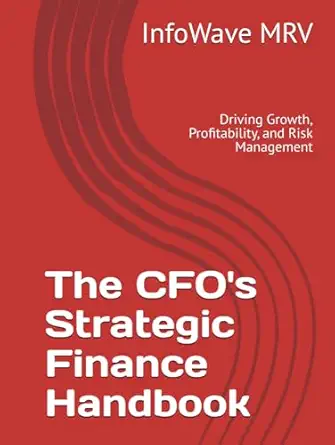
If you are a CFO, Finance Director, Controller, FP&A professional, or aspiring finance executive, The CFO's Strategic Finance Handbook: Driving Growth, Profitability, and Risk Management provides practical guidance for navigating the financial challenges faced by modern organizations.
The book explores strategic finance, profitability improvement, financial forecasting, capital allocation, risk management, digital transformation, growth strategies, and other critical capabilities required by today's finance leaders.
If you're looking to strengthen your strategic finance capabilities and become a more effective business partner, this book can serve as a practical resource for your professional journey.
Master strategic finance. Improve profitability. Lead with confidence.
Recommended Reading
The CFO's Strategic Finance Handbook: Driving Growth, Profitability, and Risk Management
Dive deeper into this topic with our comprehensive guide. Available now on Amazon.
Buy